The Project

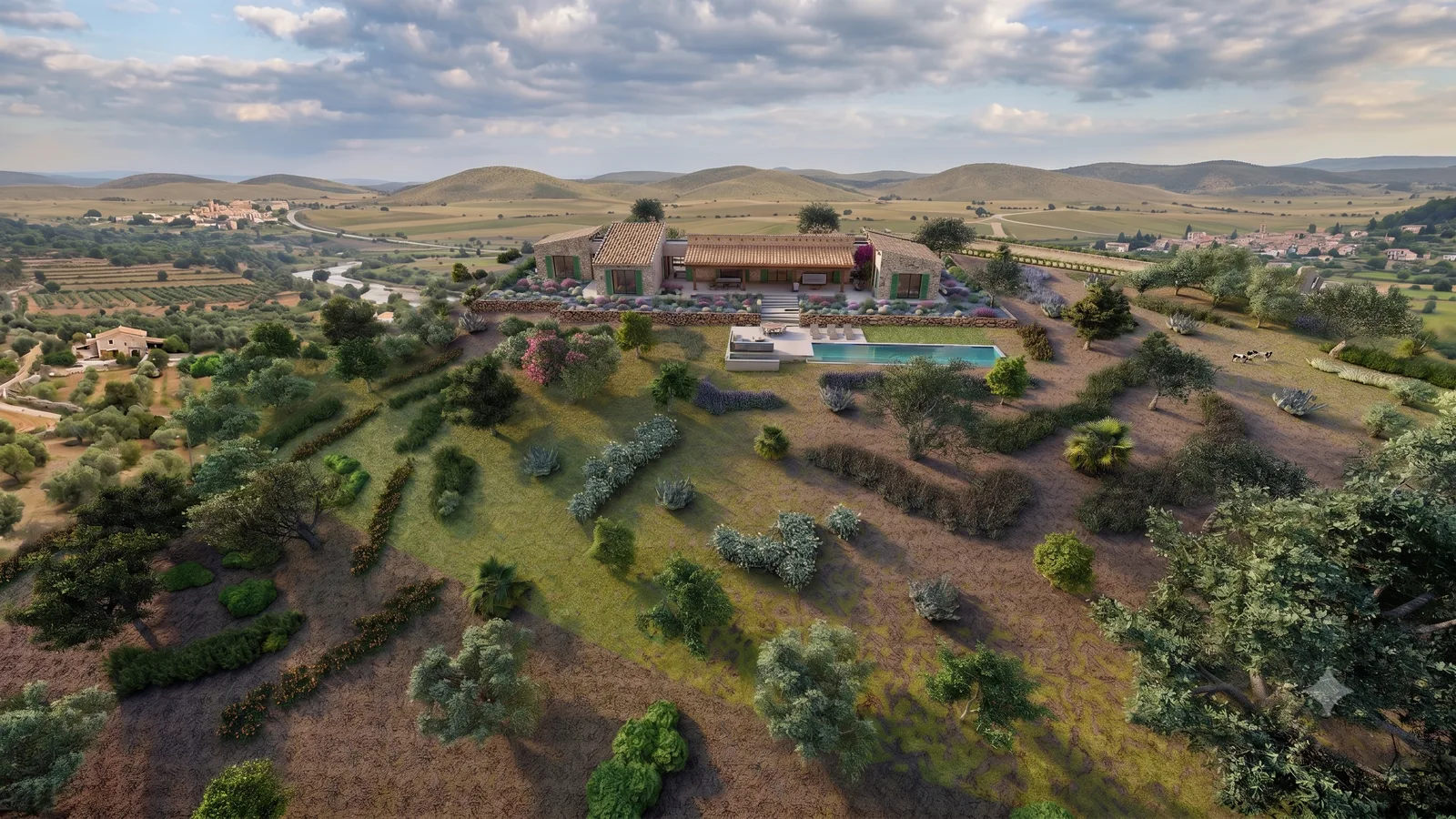
The area of Sant Llorenç is defined by its warm, dry climate. For this reason, we propose a more sustainable garden based on drought- and sun-resistant plants with low water requirements. The design seeks to preserve native species while reinforcing the Mediterranean and Mallorcan identity.

General Concept

Around the house, the garden gradually fades into the natural landscape. The outer edges of the property are transformed into a traditional Mallorcan field, ensuring a smooth integration with the surroundings. The process begins with pruning the existing vegetation and clearing the soil, preparing it for new planting.

Garden Structure and Experience

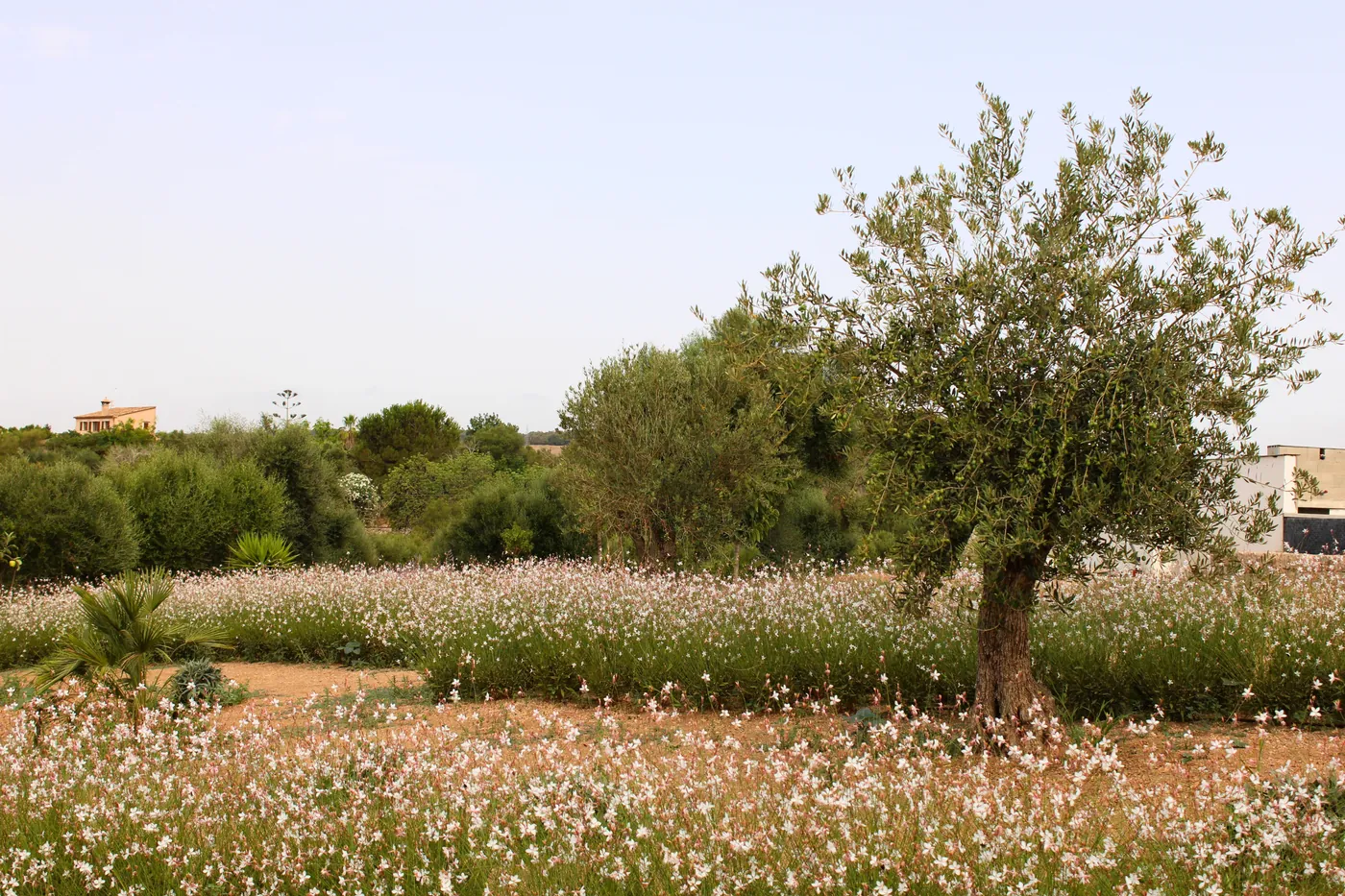
A key concept is to keep the house hidden from the entrance, so it appears as a surprise at the end of the path, emerging from the vegetation. Centenary olive trees (Olea europaea) are planted in strategic, irregular positions to anchor the landscape. As a complement, irregular cypresses (Cupressus sempervirens) rise above the rest of the vegetation, evoking both a Tuscan and a Mallorcan atmosphere.

Planting Design

In the larger open spaces, we propose informal yet generous groupings of drought-tolerant species such as: Lavandula, Rosmarinus, Perovskia, Gaura, Leucophyllum, Teucrium fruticans, Pistacia lentiscus, and Westringia fruticosa. These clusters will create natural corridors within the garden, encouraging relaxed walks and offering an immersive experience. The pathways will blend discreetly into the overall design, maintaining a natural, relaxed, and harmonious atmosphere. In certain areas, the vegetation will open slightly to form small, welcoming spots where one can sit and enjoy the surroundings.

Depth and Seasonal Rhythm

To add vertical interest and dynamism, the continuity of the lower plant masses will be broken up with taller species such as: Chamaerops humilis (dwarf palm) Echium Euphorbia dendroides These will be grouped in small clusters, subtly standing out above the rest of the vegetation.

Entrance Path and House Integration

Along the entrance path, Rosmarinus and Stipa will guide visitors naturally towards the house. At the end of the parking area, a grass garden surrounds the home. The concept is to envelop the house with these plants, creating a smooth transition between architecture and landscape. Grasses are placed strategically: the taller ones towards the outer edges of the garden, and the lower ones closer to the house. This way, the building is softened and blended into the environment. From the windows, the views are filled with gentle movement — grasses between 1 and 1.5 meters swaying with the wind.

Around the House – Two Design Options

Option 1: Naturalistic, Colorful, Controlled Disorder A more spontaneous design with grasses of different colors and textures, arranged to appear loosely scattered but intentionally composed. Advantages: Very resilient garden, more modern in style, and full of seasonal color. The garden will likely be at its best between April and January, when the grasses are full, dynamic, and rich in texture. Disadvantages: In January, most grasses dry out. They remain attractive in golden tones but less green. Between February and April, the dry growth must be cut back and left to regenerate.

Option 2: Layered Softness with Groundcovers and Stone A more structured design with: Lippia or river stone in soft, undulating forms near the house Followed by creeping rosemary With Stipa at the back Advantages: When Stipa dries or is cut back, it remains visually hidden behind the rosemary. Lippia is a drought-tolerant, low-maintenance, walkable groundcover — an excellent alternative to lawn. Alternatively, river stone can be used instead of Lippia, its grey-blue tones adding texture and visual contrast.