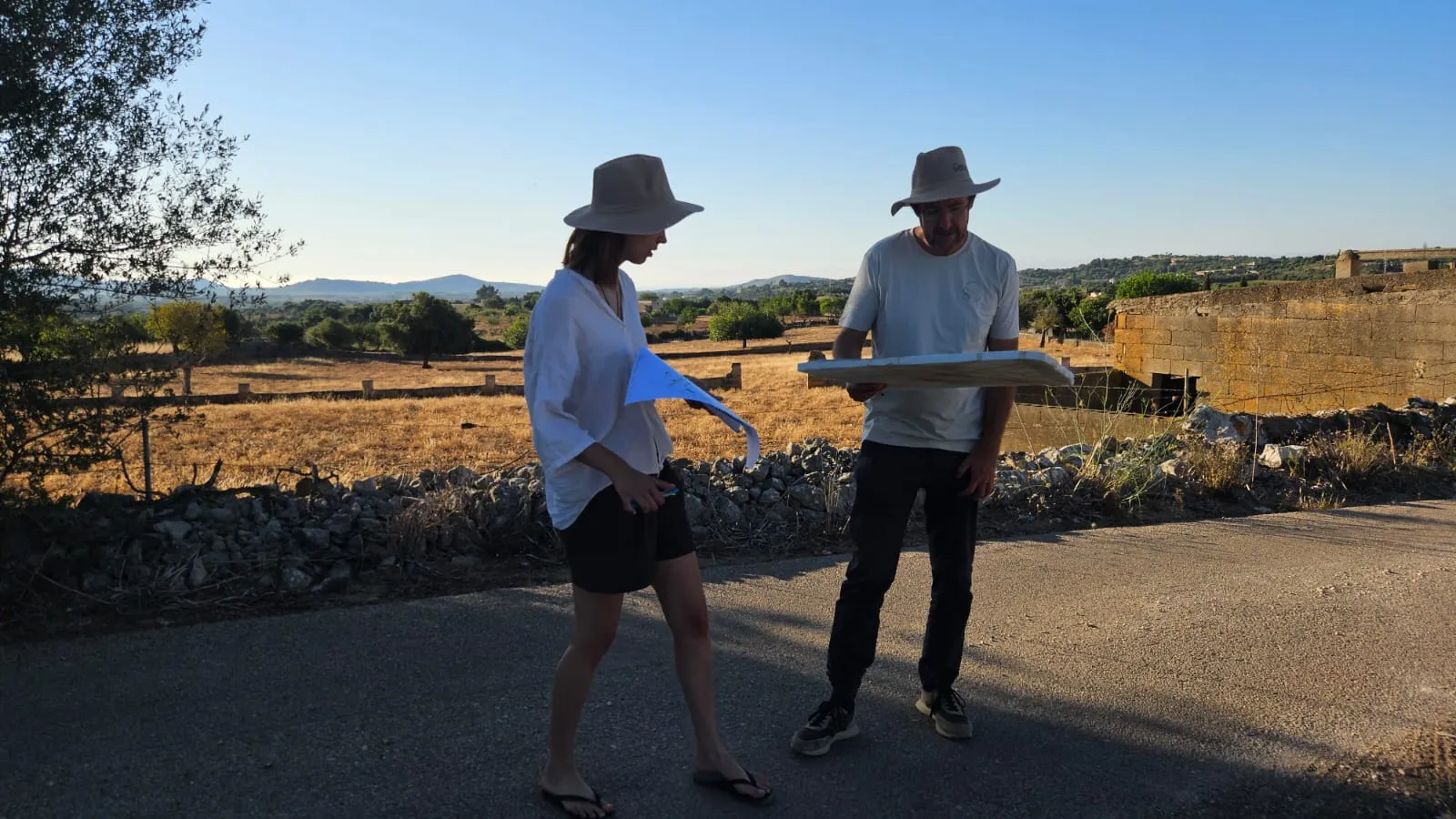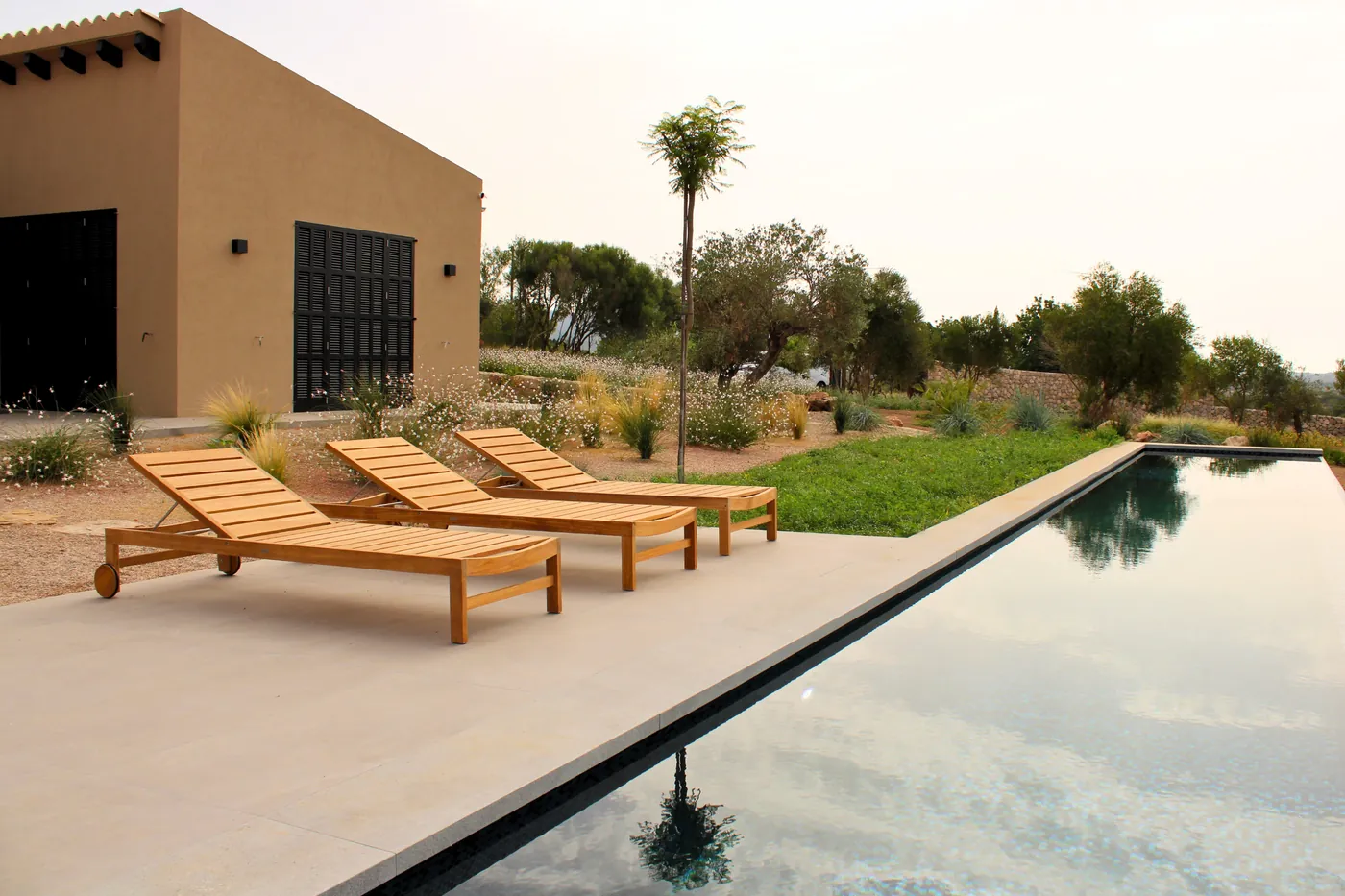
Engineering natural slopes and Mediterranean rockeries for private villas in Santa Ponsa and Calviá, preserving geological contours and endemic botany.
Building an enduring landscape across the rugged, limestone-rich topography of Southwestern Mallorca demands an architectural philosophy grounded in restraint and geology. In coastal enclaves like Santa Ponsa, Nova Santa Ponsa, and the surrounding slopes of Calviá, residential parcels often feature steep gradients, natural ravines, and exposed rock formations.
Rather than imposing aggressive earthworks or artificial grading that disrupts natural drainage corridors, high-end landscape architecture embraces the site’s natural topography as its foundational structural asset.
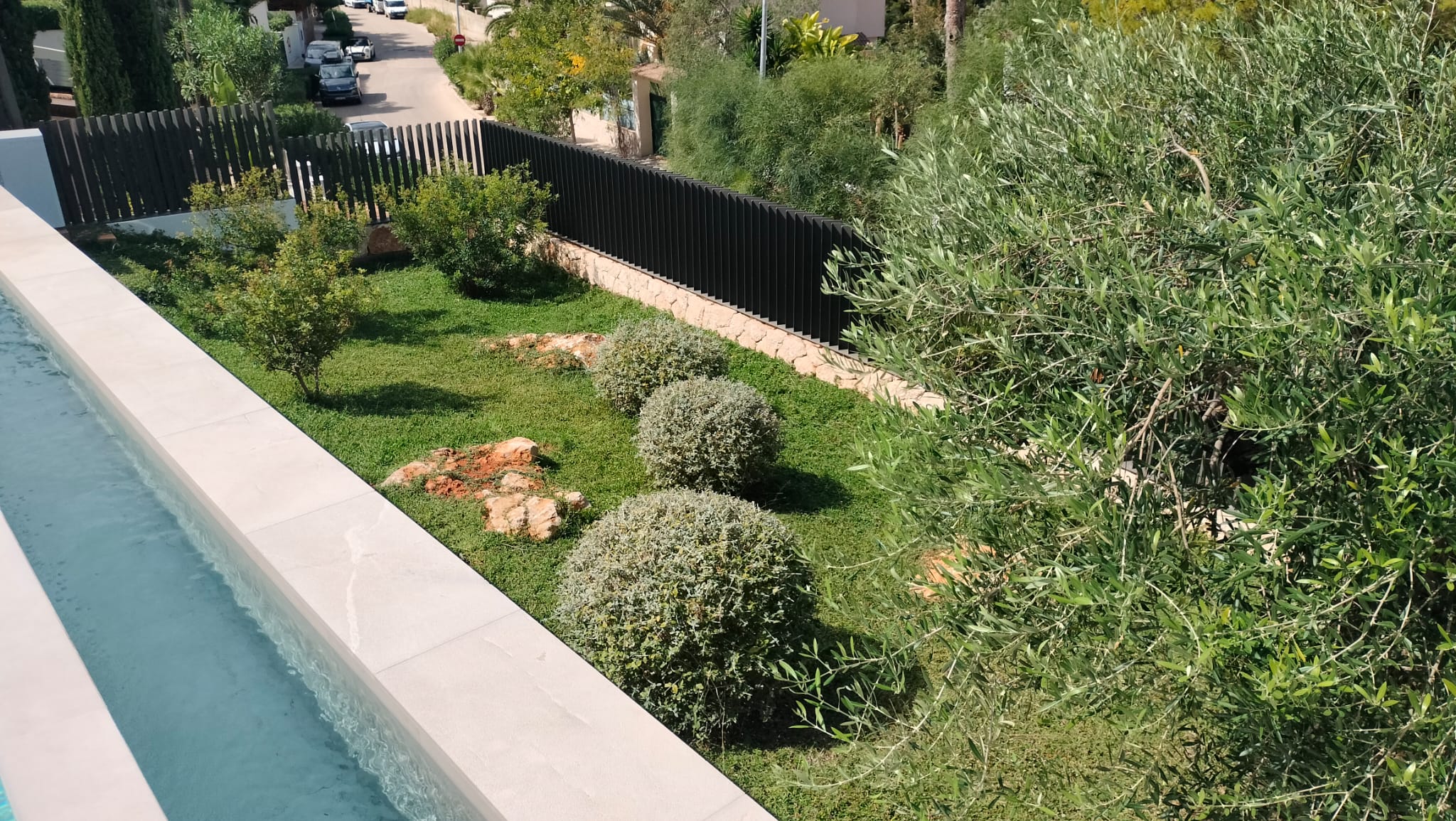
1. Topographical Respect: Working with the Incline
Standard construction practices often default to extensive retaining walls and level terracing. On steep Mallorcan parcels, this approach severs the dialogue between architecture and nature while introducing significant geotechnical risks during intense autumn rainfall.
In our project in Santa Ponsa, the site descends through natural slopes, forming an organic ravine connecting the residence with the surrounding Mediterranean canopy. The structural intervention focuses on stabilization rather than transformation:
- Geological Terracing: Incorporating existing stone outcrops into the circulation pathways, allowing natural steps to emerge organically from the limestone shelf.
- Natural Water Channels: Utilizing the existing ravine as a bioswale, guiding seasonal runoff away from structural foundations and into deep subterranean aquifers.
- Subsoil Anchoring: Planting deep-rooting Mediterranean shrubs that naturally stabilize the soil structure without requiring invasive concrete footings.
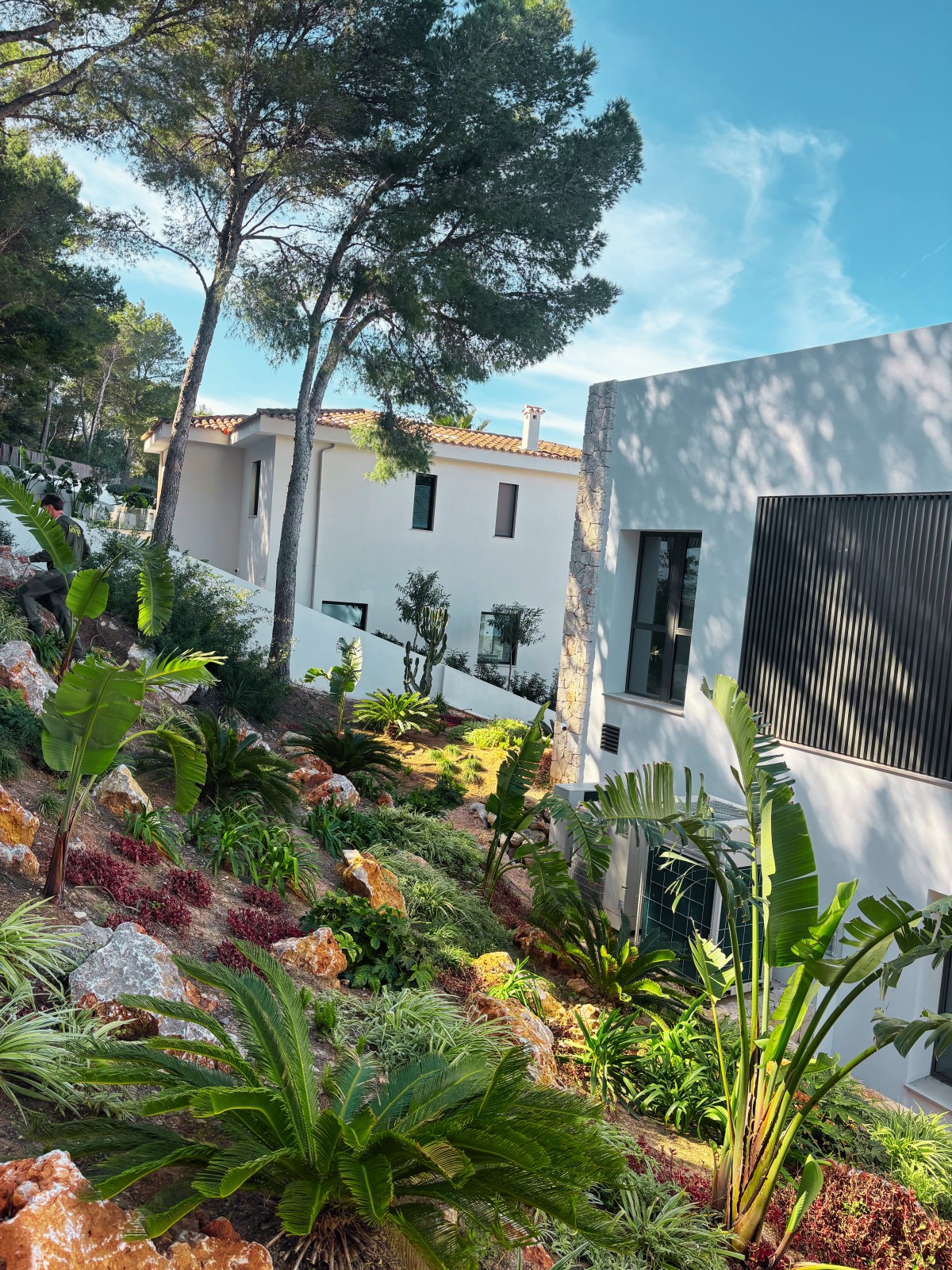
2. Mediterranean Rockeries (Rocallas): Structure Meets Botanical Softness
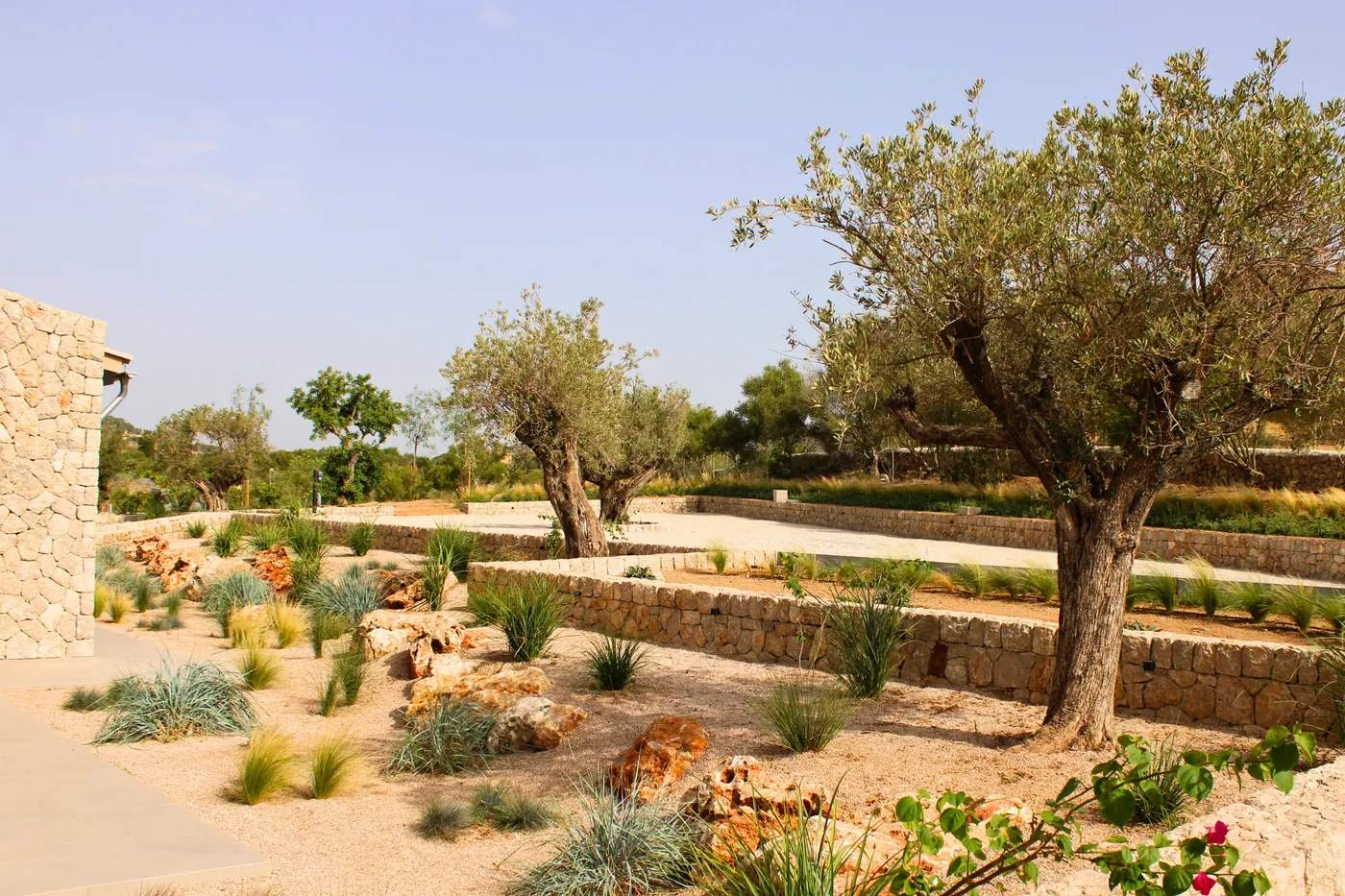
Dry-stone rockeries (rocallas) act as the visual and functional bridge between the mineral geometry of modern villas and the wild landscape of the Tramuntana foothills.
To achieve lasting visual balance, the selection of rock and stone must match the mineral composition of local Mallorcan limestone:
- Mineral Continuity: Sourcing native calcarenite and fractured limestone with weathered patinas, ensuring that retaining boulders appear as ancient, natural outcroppings.
- Layered Planting Volumes: Installing descending tiers of cascading foliage that soften stone edges while anchoring the soil against erosion.
- Gravel Mulching: Dressing planting pockets with crushed local gravel to suppress weed competition, regulate root temperatures during peak summer heat, and prevent topsoil wash-out.
3. Botanical Resilience for Calvi?’s Coastal Slopes
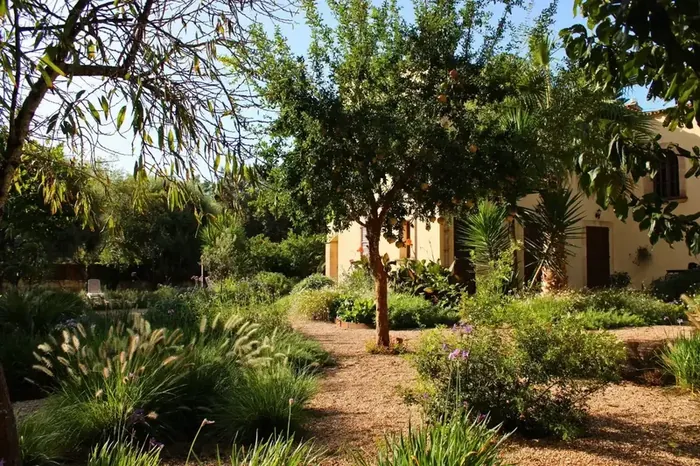
The microclimate of Santa Ponsa combines high solar radiation, nutrient-lean calcareous soils, and saline coastal breezes. Successful botanical design requires species engineered by nature to thrive in rocky fissures with minimal supplemental irrigation:
- Structural Evergreen Shrubs: Pistacia lentiscus (Mastic tree), Chamaerops humilis (Mediterranean fan palm), and Phillyrea angustifolia provide permanent green mass and wind resistance.
- Aromatic Groundcovers: Dense groupings of Rosmarinus officinalis ‘Prostratus’, Lavandula dentata, and Teucrium fruticans provide silver-gray foliage, textural movement, and year-round floral interest.
- Slope-Stabilizing Groundcovers: Integrating hardy species such as Agapanthus africanus, Chlorophytum comosum, and Asparagus densiflorus to weave a living botanical carpet across steep inclines.
4. Craftsmanship and Thirty Years of Island Expertise
Executing complex landscape interventions on steep coastal terrain requires generational knowledge of Mallorca?s geology and flora. Founded in 1999 by Pedro Campaner, S’Estepa Design applies three decades of field expertise to engineer living ecosystems that integrate seamlessly with the architectural heritage of Mallorca.
To explore our completed interventions on hillside terrain, review our dedicated case study on Santa Ponsa Garden Design.
-card.webp)