S'Estepa Design's technical insight on designing high-end, drought-resistant gardens that thrive on Mallorca's unique terroir.
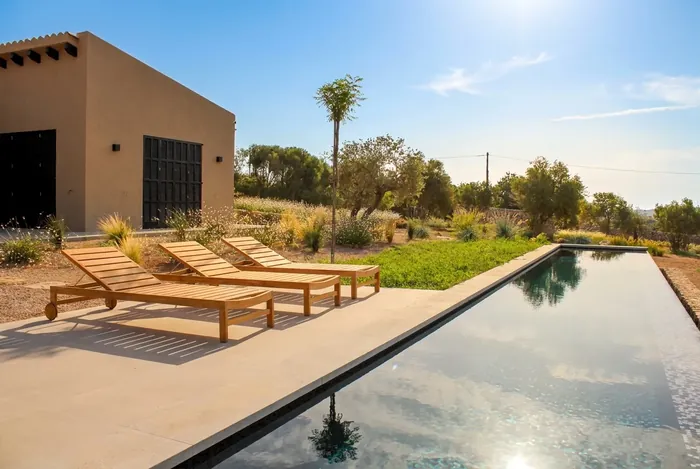
In the exclusive residential enclaves of Mallorca, the definition of luxury has undergone a significant architectural shift. High-end property owners no longer demand resource-heavy, manicured northern-European lawns that fight the dry heat. Today, the most exceptional estates celebrate the natural landscape of the Balearic Islands—integrating native flora, local limestone, and water-wise planting schemes to create gardens that feel organically unified with the Mediterranean landscape.
At S’Estepa Design, our approach is defined by thirty years of working directly with the unique soils, winds, and microclimates of Mallorca. Led by founder and agricultural technologist Pedro Campaner, our design philosophy proves that ecological resilience and high-end aesthetics are not mutually exclusive.
.webp)
Designing for the Terroir: Soil, Sun, and Stone
Successful landscape design in Mallorca begins with a deep, scientific understanding of the ground beneath. The island’s geological canvas ranges from the deep, iron-rich clays (Call vermell) of the plains to the alkaline, calcareous rocky limestone terrains of the Serra de Tramuntana.
Traditional, non-native plants fail in these conditions because they cannot handle the high pH of the limestone soils and the intense summer drought. In contrast, native species have spent millennia adapting to these parameters. When we design a garden, we anchor the structure with key botanical species that thrive naturally in poor soils:
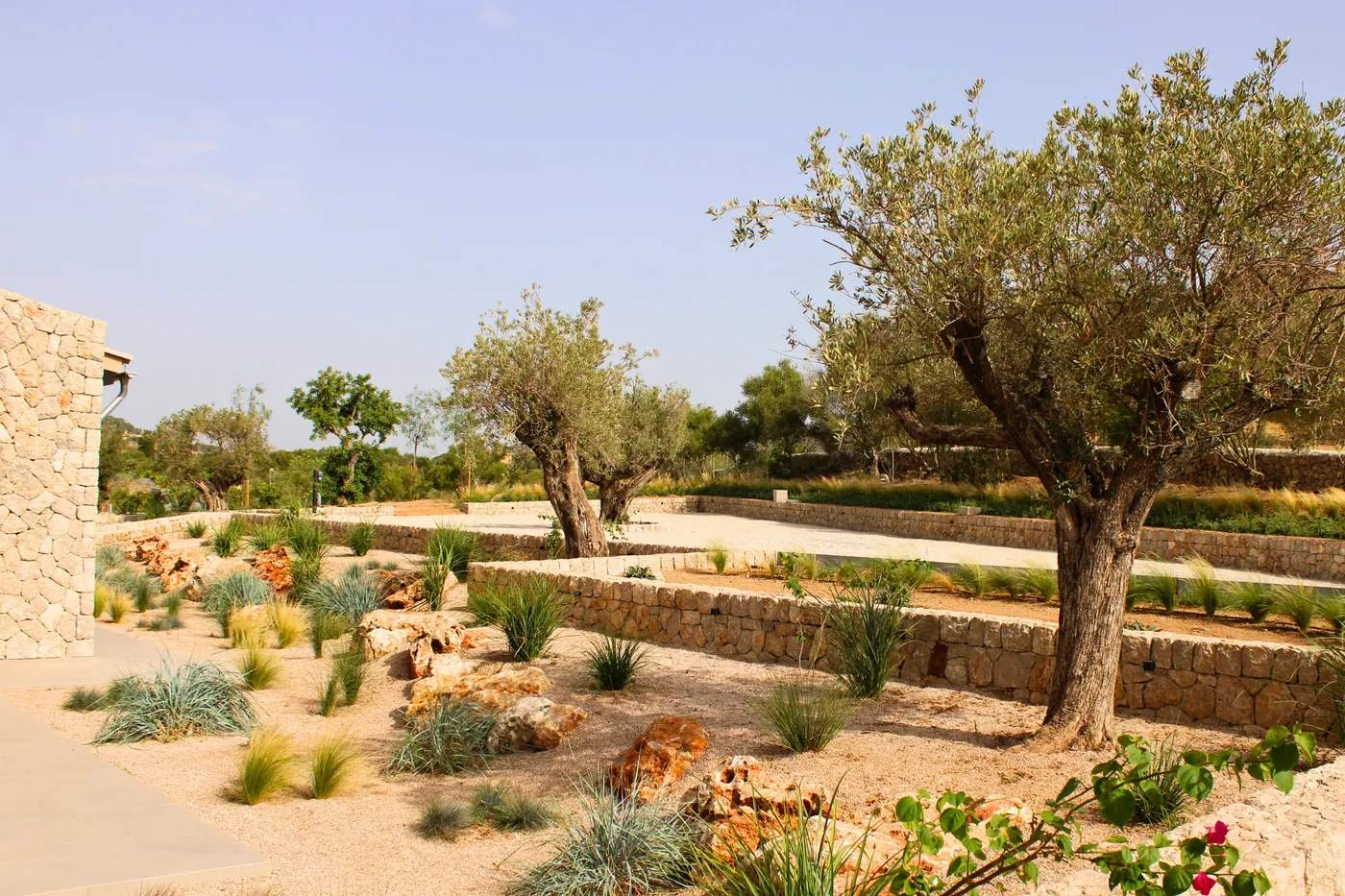
- Centenary Olive Trees (Olea europaea): These ancient structures act as visual anchors, their canopies filtering the sunlight and protecting the volatile oils of the understory herbs.
- Mastic Shrub (Pistacia lentiscus): Known locally as Mata, this evergreen brings a resinous, balsamic aroma and provides year-round density. It is highly resistant to coastal sea spray and requires virtually no irrigation once established.
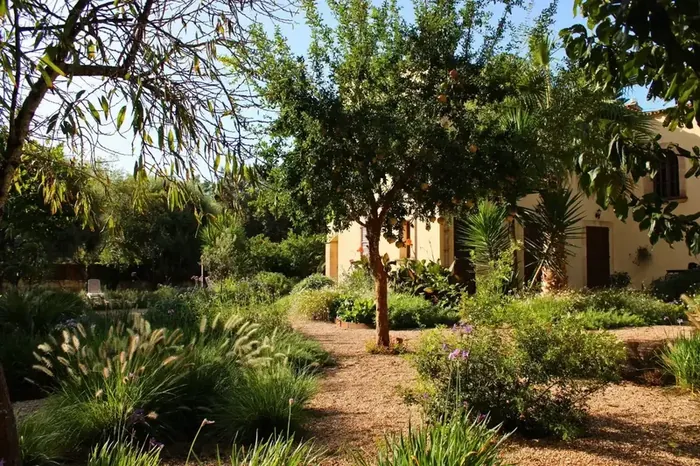
- Aromatic Understory: Lavenders (Lavandula dentata), wild rosemary (Rosmarinus officinalis), and sage (Salvia) create a low-maintenance, aromatic carpet that stabilizes the soil and releases essential oils under the summer heat.
The Dry Garden: A New Aesthetic of Water Efficiency
Water scarcity is one of the most critical factors in modern Mallorcan landscaping. A luxury dry garden (Jardín Seco) is designed to minimize irrigation by relying on architectural earthworks, local mineral layers, and drought-tolerant planting palettes.
Replacing water-thirsty grass lawns with layers of local river gravel, crushed limestone, and volcanic rocks decreases water use and adds a sophisticated textural element to the property.
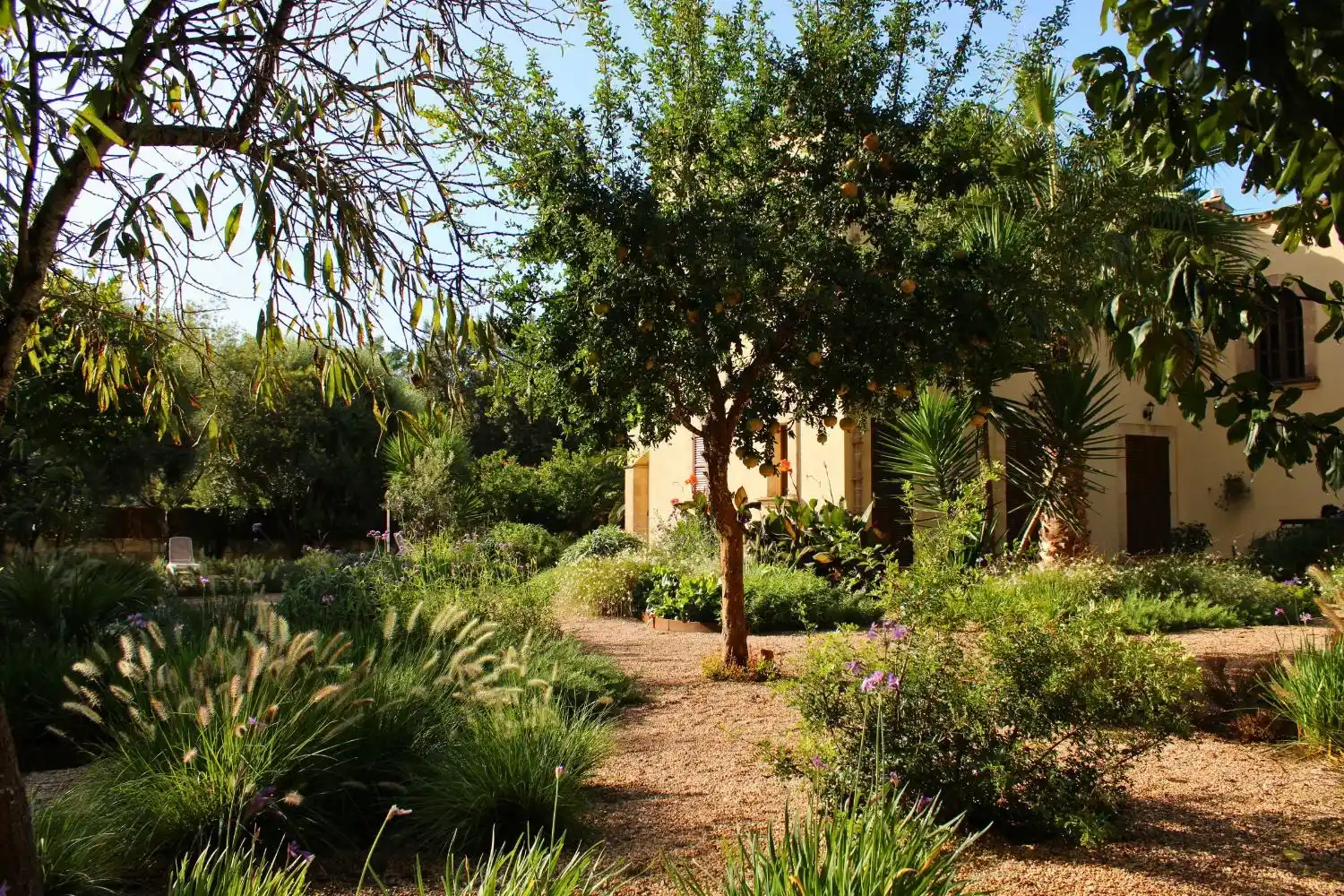
In our project in Crestatx, we completely replaced the traditional lawn with layers of mini river stone and organic islands of native shrubs, ornamental grasses (Stipa tenuissima), and structural palms (Chamaerops humilis). This transformation reduces water requirements by over 70% while creating a dynamic landscape that changes gracefully with the seasons.
Generational Knowledge: The S’Estepa Advantage
Designing a landscape that matures beautifully over decades requires more than academic design principles; it requires empirical, local experience. Pedro Campaner’s generational understanding of Mallorcan agriculture ensures that every botanical species is placed in its optimal microclimate, taking into account the coastal salinity, mountain winds, and dry soil structures.
By working with the natural patterns of the island, we construct living sanctuaries that remain vibrant, sustainable, and luxurious for generations to come.
-card.webp)